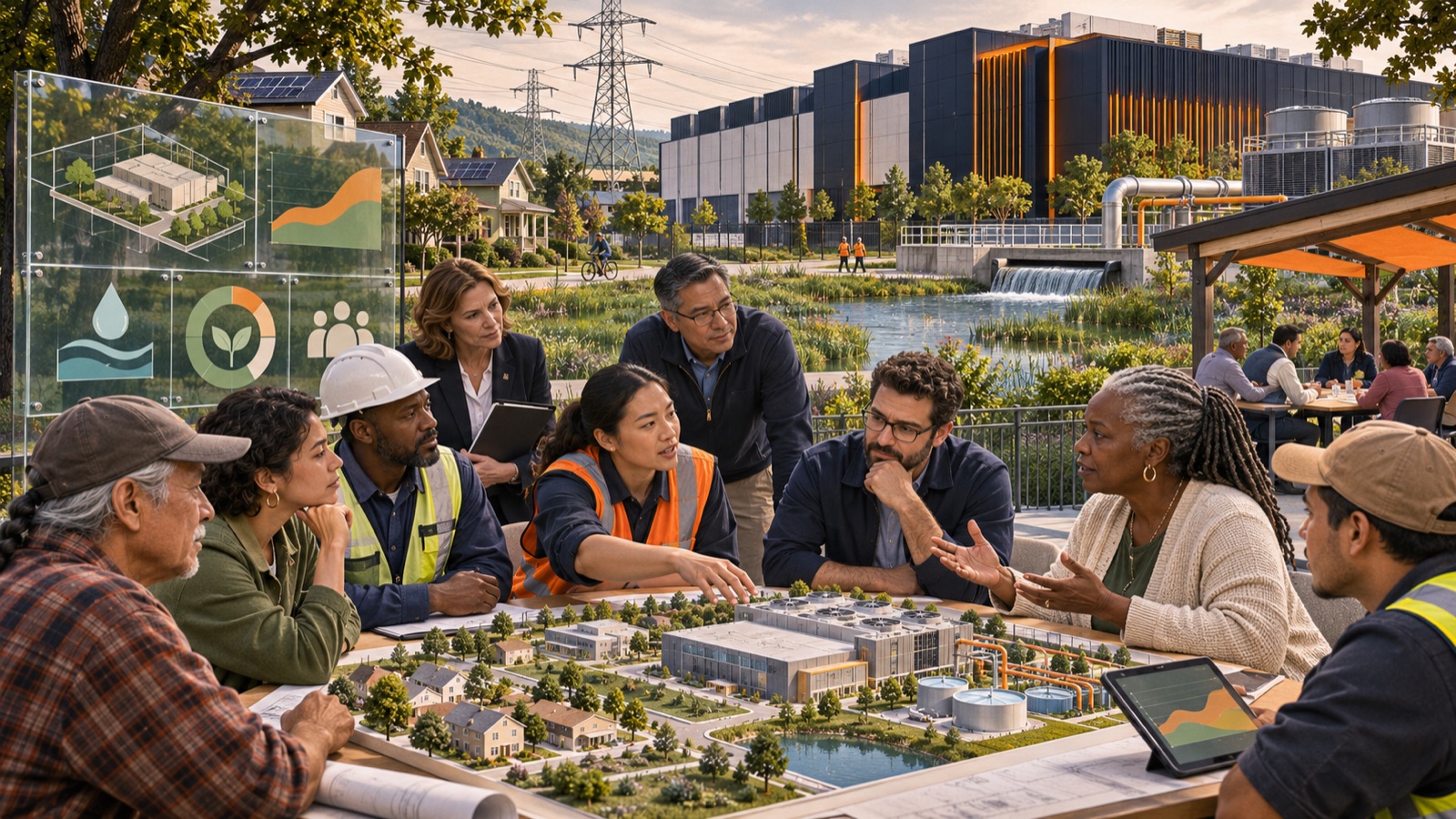
A compute campus is not only a building full of machines. It changes the local equation for electricity, water, noise, roads, jobs, tax incentives, and the public infrastructure needed to keep it running. Residents therefore meet the AI build long before a model is served from it.
OpenAI's November 5 announcement proposes a local compact for every future campus it owns and operates. The company says residents should be heard while plans can still change, receive a point of contact throughout the campus lifetime, and get annual public reporting on energy, water, noise, and hiring.
Accountability has to be designed in
The compact includes paying the full cost of electricity and infrastructure, financial assurances if a project is delayed or canceled, low-water cooling plans, independent noise studies, and local training and purchasing. OpenAI cites a $4.8 million school-meal grant in Effingham County and a $6 million childcare commitment in Pike County as examples of locally selected investment.
A responsible compute campus is not defined only by how much capacity it adds. It is defined by whether the people living beside it can see, influence, and challenge the trade-offs.
OpenAI's commitments are voluntary promises from a company that is also building the infrastructure, so they need public measurement and enforceable rules to mean more than good intentions. The builder lesson is broader: a large AI project needs a community contract covering costs, resources, jobs, and a way to recover benefits if delivery falls short.
OpenAI publishes a National Community Compact and Compute Campus Policy Blueprint covering local input, energy and infrastructure costs, water, noise, hiring, public reporting, and local investment; these are OpenAI commitments and policy proposals, not an independent audit of campus impacts.
OpenAI · Setting a new standard for responsible AI infrastructure ↗