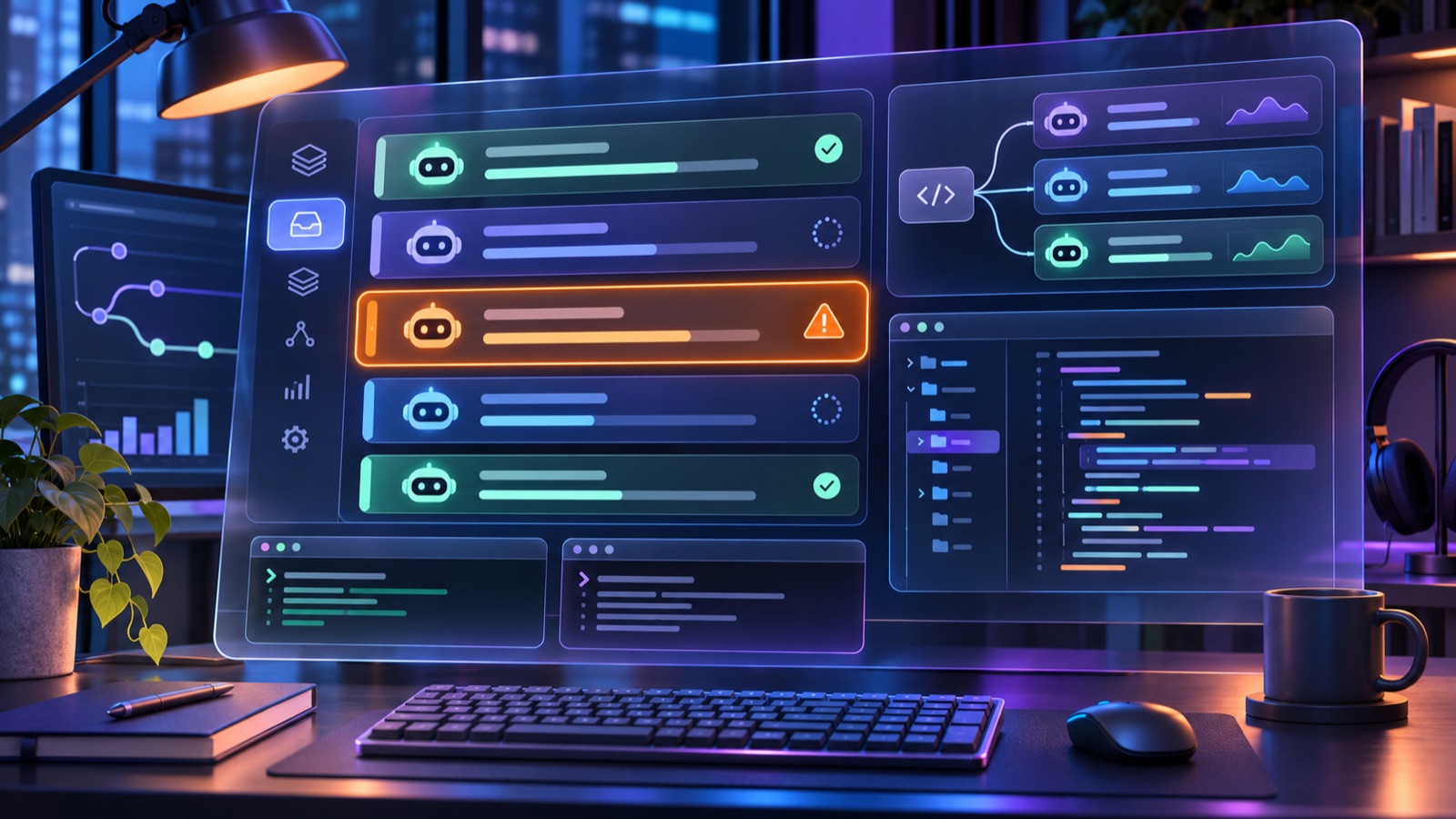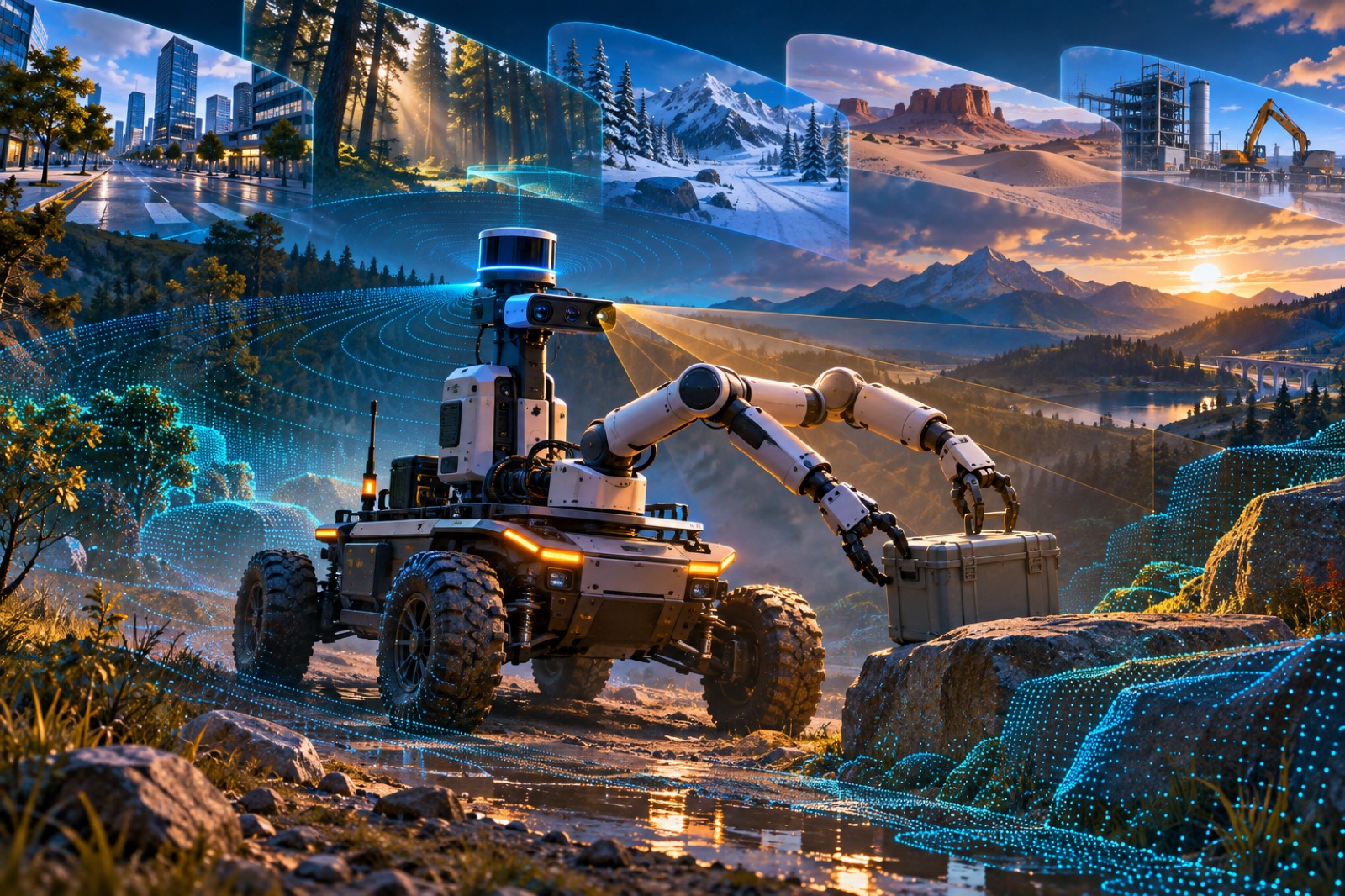
A simulator is valuable when it gives a robot more than a pretty scene. It should let a builder vary weather, lighting, viewpoints, sensors, and actions, then turn those variations into training data that can be inspected and replayed. NVIDIA's Cosmos 3 release treats world simulation as that kind of interface.
The release presents four open checkpoints. Nano-Transfer-Auto changes weather, lighting, and time; Nano-Sim-Auto produces synchronized camera and LiDAR views; Nano-Sim-Transfer maps simulator controls and text to photorealistic video; and Nano-Sim-Bimanual predicts video from robot or camera actions. NVIDIA lists 16 billion trainable parameters across the release and publishes the models under the OpenMDW1.1 license.
The control signal is the interesting part
World models are often described as video generators. That framing hides the engineering opportunity. If a model can respond to a simulator control, a text instruction, a camera movement, or a bimanual action, the generated sequence becomes a testable consequence of an input rather than an unconnected clip. That makes simulation useful for planning, data augmentation, and failure rehearsal.
Open weights and a clear license lower the barrier to trying the loop, but they do not remove the sim-to-real problem. A plausible frame can still hide an impossible contact, a bad sensor timing assumption, or a policy that fails outside the training distribution. The release gives builders more knobs; it does not certify the physical world.
The useful world model is not the one that makes the most convincing video. It is the one whose conditions and actions a builder can change, measure, and replay.
Start with counterfactuals
A practical experiment is to change one condition at a time: move the camera, alter the light, remove a sensor, or change the robot action. Compare the generated outcome with a known simulator state and log where the model invents certainty. That turns an open checkpoint into a research instrument instead of another demo reel.
NVIDIA's release describes four open Cosmos 3 checkpoints for world simulation: Nano-Transfer-Auto, Nano-Sim-Auto, Nano-Sim-Transfer, and Nano-Sim-Bimanual. The post lists 16B trainable parameters and an OpenMDW1.1 license; those are vendor-published release details, not an independent comparison of real-world robot performance.
Hugging Face · NVIDIA Cosmos 3 ↗